Chemical Grouting & Soil Stabilization
Loose soil and hidden voids are what cause slabs to settle and seawalls to lean. Chemical grouting fixes the soil itself—injected polyurethane resin fills the empty spaces and binds loose ground into a solid, water-resistant mass.
How Polyurethane Resin Stabilizes Soil
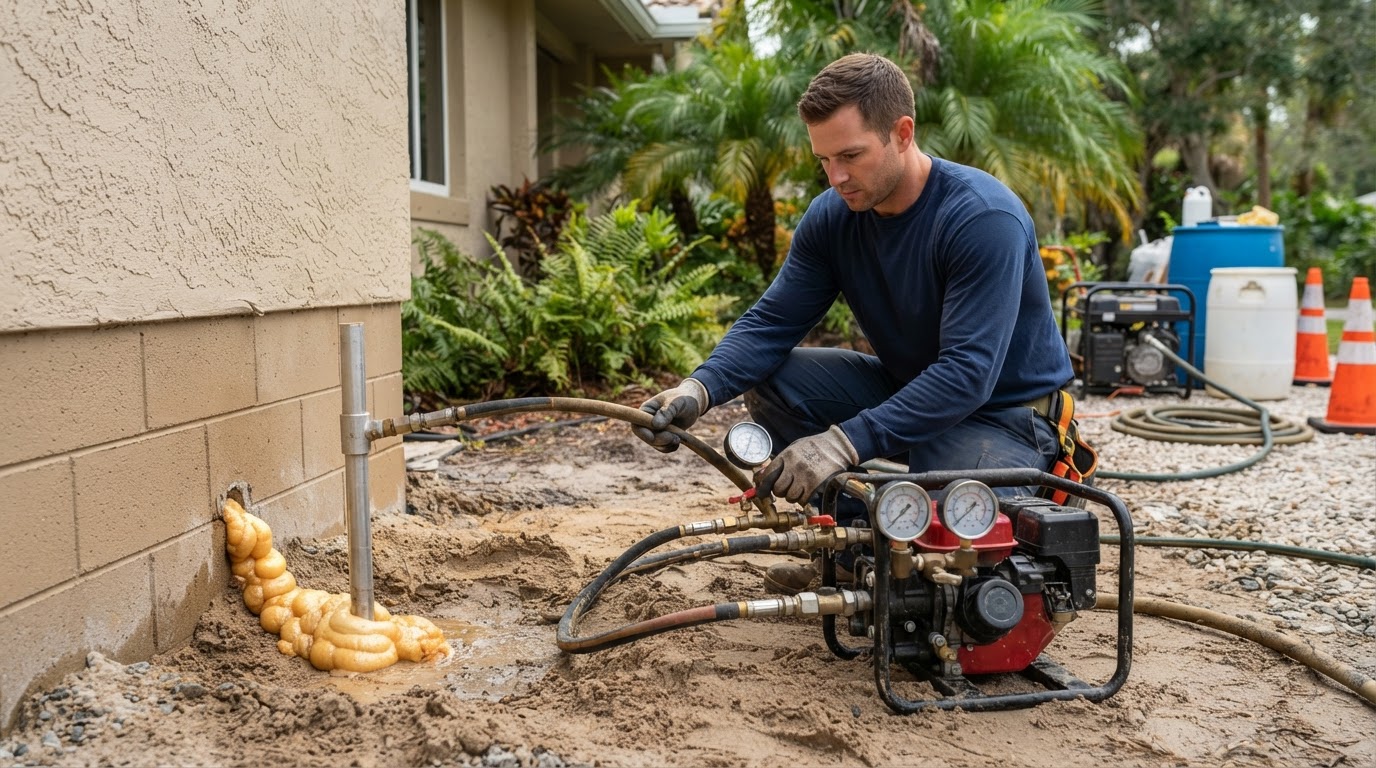
Chemical grouting starts as a liquid. We inject an expandable polyurethane resin—Prime Resin is one we use where it matches our documented methods—through small ports drilled down to the problem zone, whether that's beneath a settled slab or behind a seawall cap.
Once it's in the ground, the resin reacts with moisture and begins to expand. As it grows it pushes into the surrounding loose sand and void spaces, filling them completely. Within minutes it cures into a dense, closed-cell mass that binds the soil particles together into a solid composite.
The cured resin is lightweight but strong, water-resistant, and chemically inert. It won't wash out the way loose sand does—which is the whole point. By filling the voids and binding the soil, grouting stops further settlement and, on qualifying slabs, can lift the concrete back toward its original elevation.
Two Main Applications
Beneath Foundation Slabs
Injected through a settled slab, the resin fills voids and consolidates loose sub-base soil—stabilizing the slab and, on qualifying pours, lifting it back toward level without re-pouring concrete.
Behind Seawalls
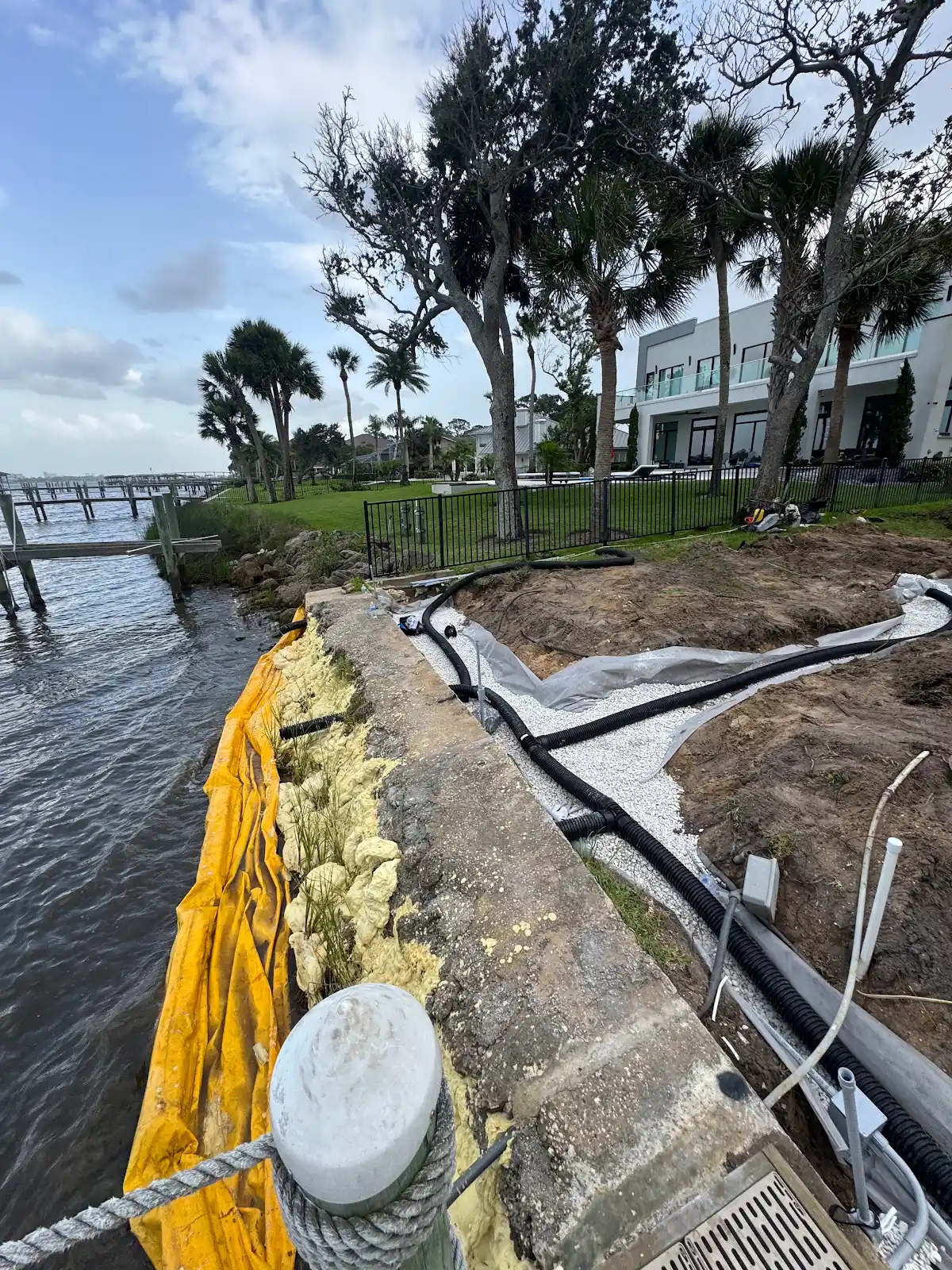
Injected behind a seawall cap, the resin fills the washout voids and binds the backfill into a stable, water-resistant mass—stopping the soil loss that causes leaning and cracking.
Wondering If Grouting Fits Your Problem?
We assess the soil conditions on your site and explain whether chemical grouting is the right fix—or if a different method makes more sense for your property.