Foundation Repair & Stabilization
Cracks in your walls, doors that won't shut, or a slab that's settled and left a void underneath? We assess the settlement on-site and explain your stabilization options—often without demolition.
Common Signs We See on Florida Slabs
Stair-step cracks in stucco, diagonal cracks in interior walls, or cracks radiating across a slab.
Frames shifted by settlement so doors bind, drag, or won't latch.
Floors that slope or dip, gaps under baseboards, or a noticeable roll across the room.
A concrete slab that has dropped below its original elevation, often with voids beneath.
Soil washed out or consolidated under a slab, leaving it unsupported and prone to cracking.
Sunken aprons and broken slab sections that create trip hazards.
Polyurethane Injection to Stabilize & Re-Level
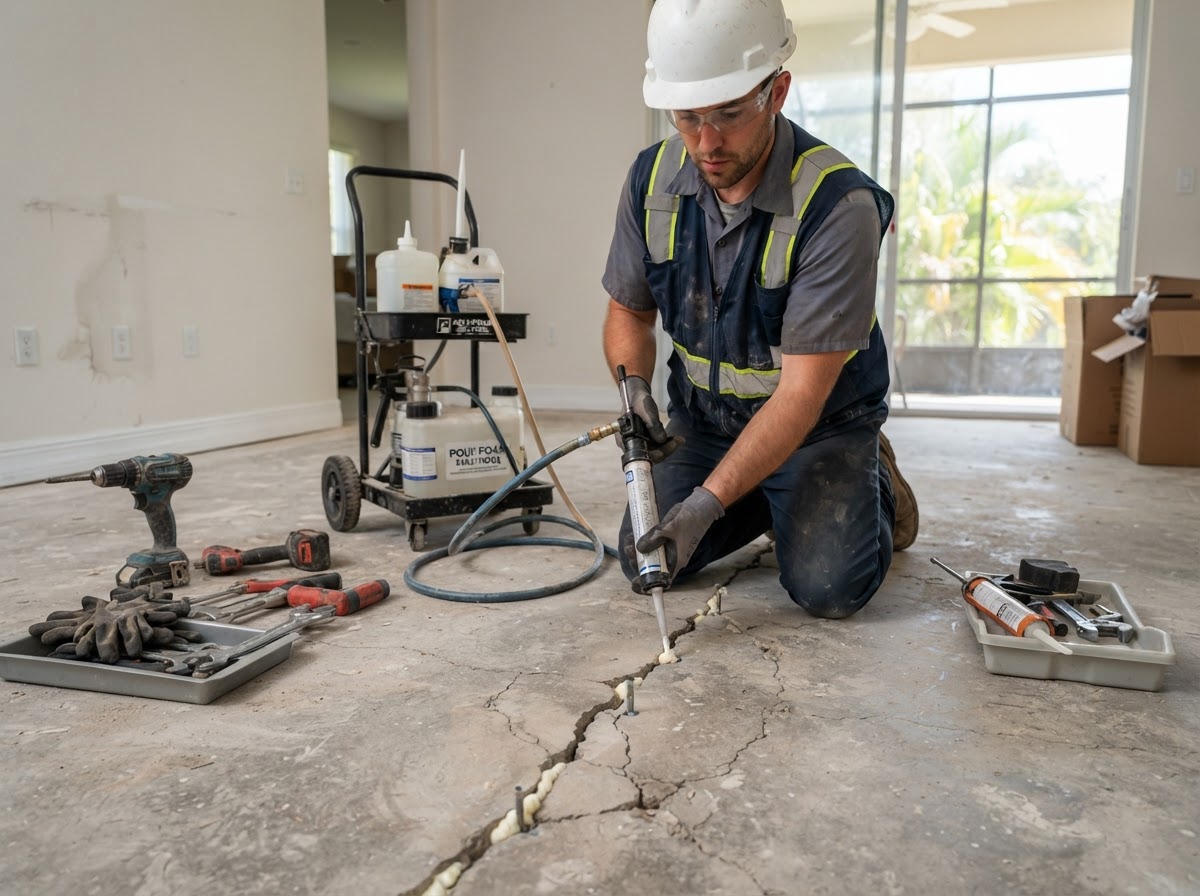
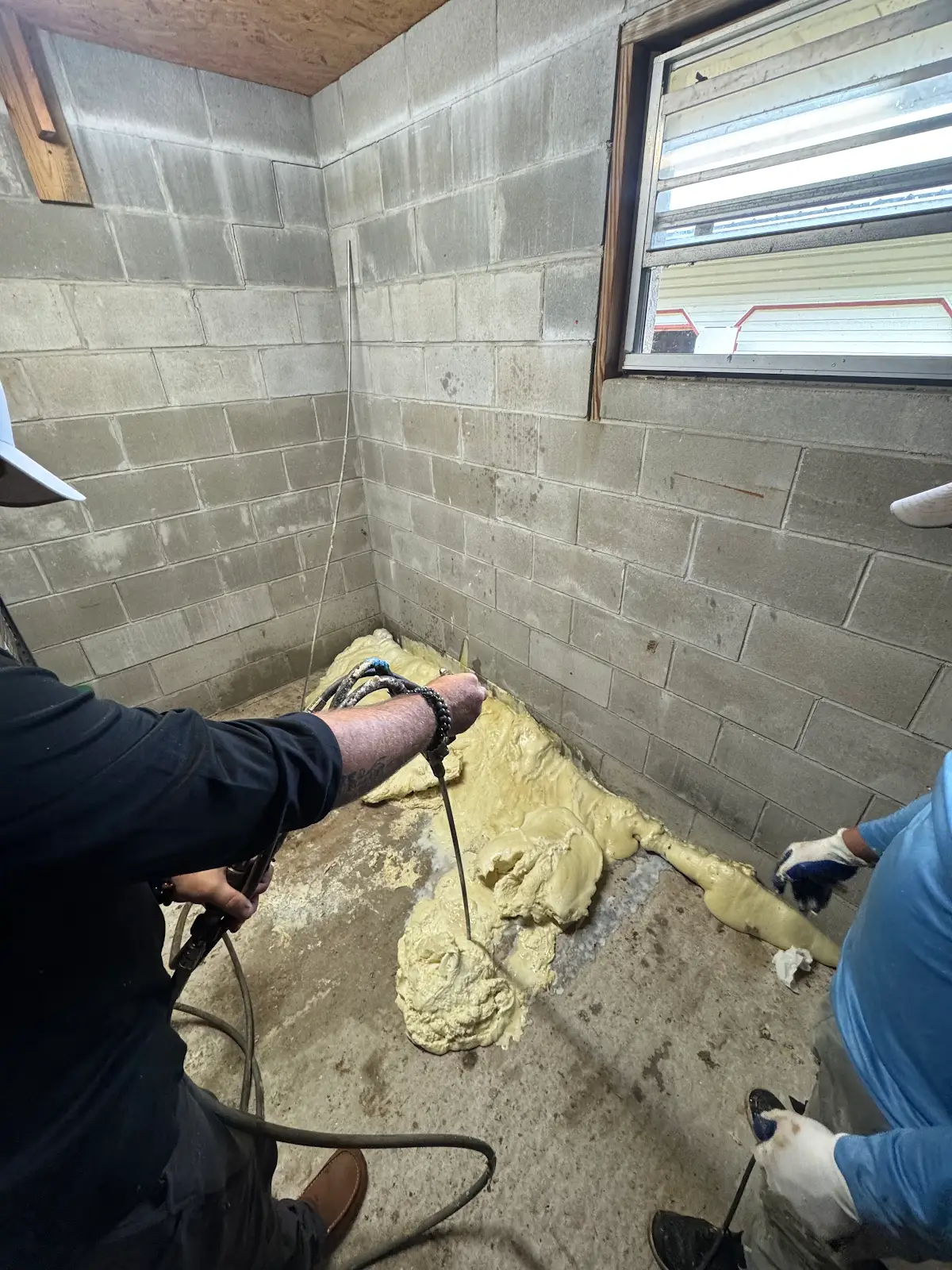
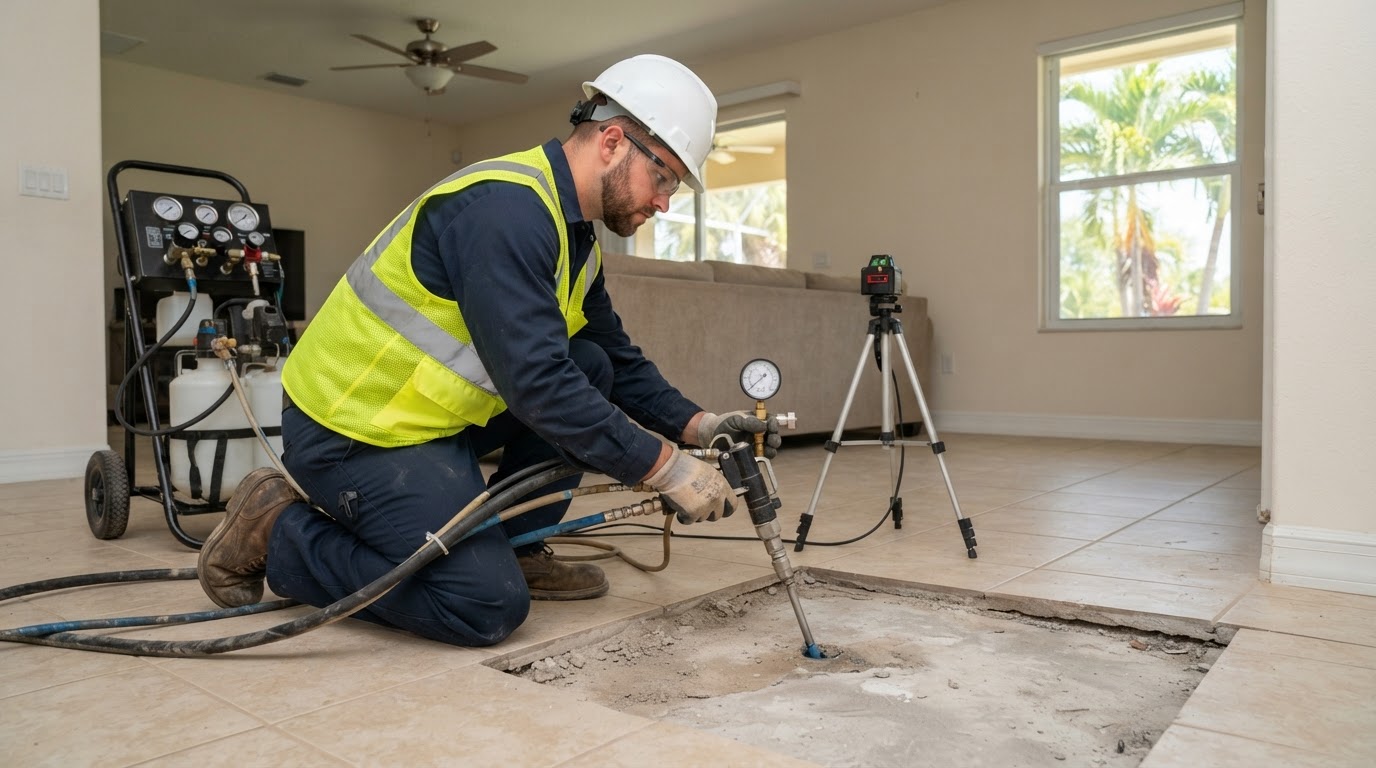
For many settling slabs, we use polyurethane injection—also called chemical grouting or slab lifting. We drive small injection ports through the slab and pump expanding polyurethane resin into the voids and loose soil beneath. As the resin expands it compacts and binds the soil, then lifts and re-levels the qualifying slab back toward its original elevation.
The result is a denser, water-resistant base under your slab—without the dust, disruption, and cost of tearing out and re-pouring concrete.
From Our Foundation Specialist
Scott Williamson explains foundation assessment & repair
Want Scott to walk through your foundation issues in person? He personally handles free foundation assessments across Florida.
Don't Let Settlement Get Worse
Foundation settlement rarely fixes itself. A free on-site assessment gives you a clear, written plan and honest pricing—before small cracks become major repairs.