Seawall Repair & Restoration
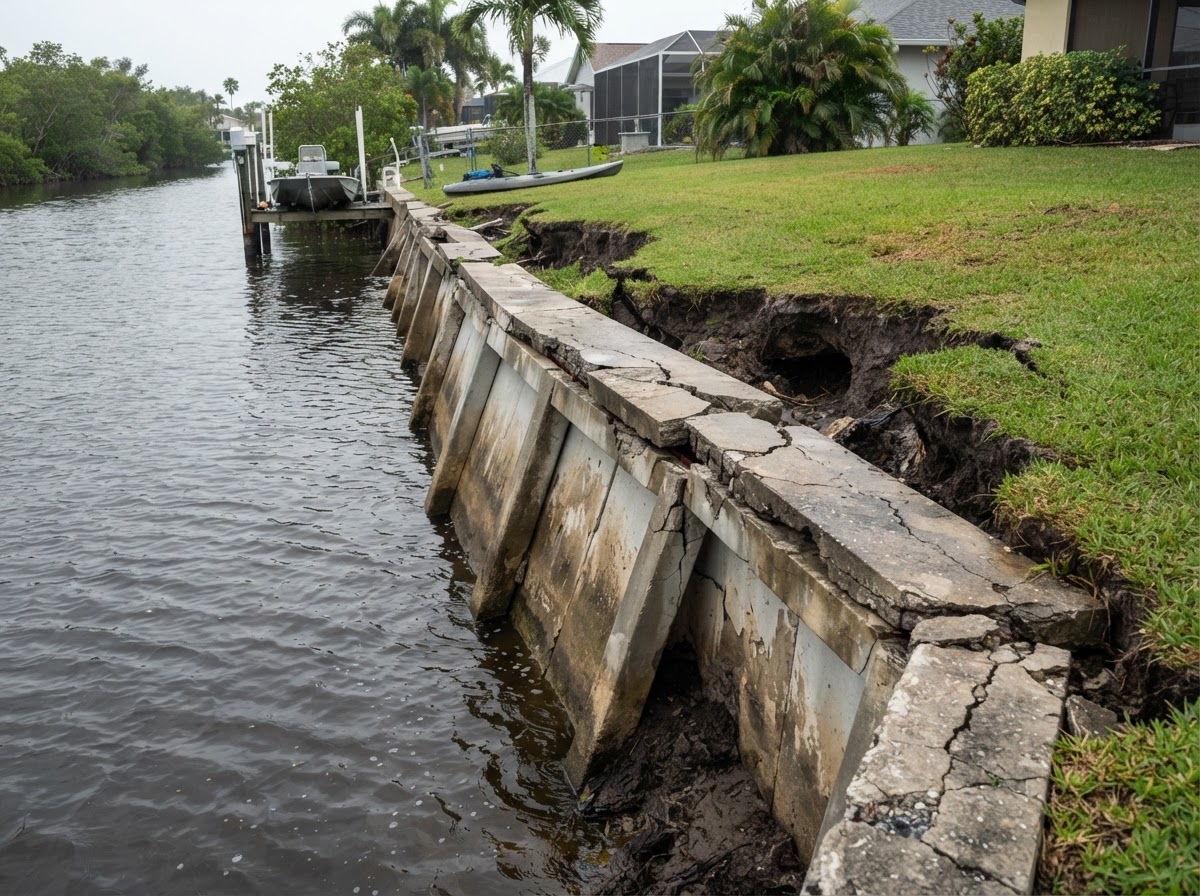
Soil washing out behind your seawall? Cracks in the cap, leaning panels, or voids opening along your waterfront? We assess the damage on-site and explain your repair options—often without tearing the wall out.
Water finds a way—and it takes soil with it
Most Florida seawall problems we see start the same way. Tides and storm water push through joints or weep holes, carrying fine sand and soil out from behind the wall. Over time that washout creates empty voids behind the seawall cap. Without soil pressing back, the wall leans or cracks—and the voids keep growing.
Hydrostatic pressure builds behind the wall when trapped water has nowhere to drain. The combination of voids and pressure is what eventually pushes panels outward and splits the concrete cap.

Repair Options That Depend on Your Site
We don't assume a full replacement. On-site conditions dictate the right fix—here's what we may recommend.
Chemical Grout Void Fill
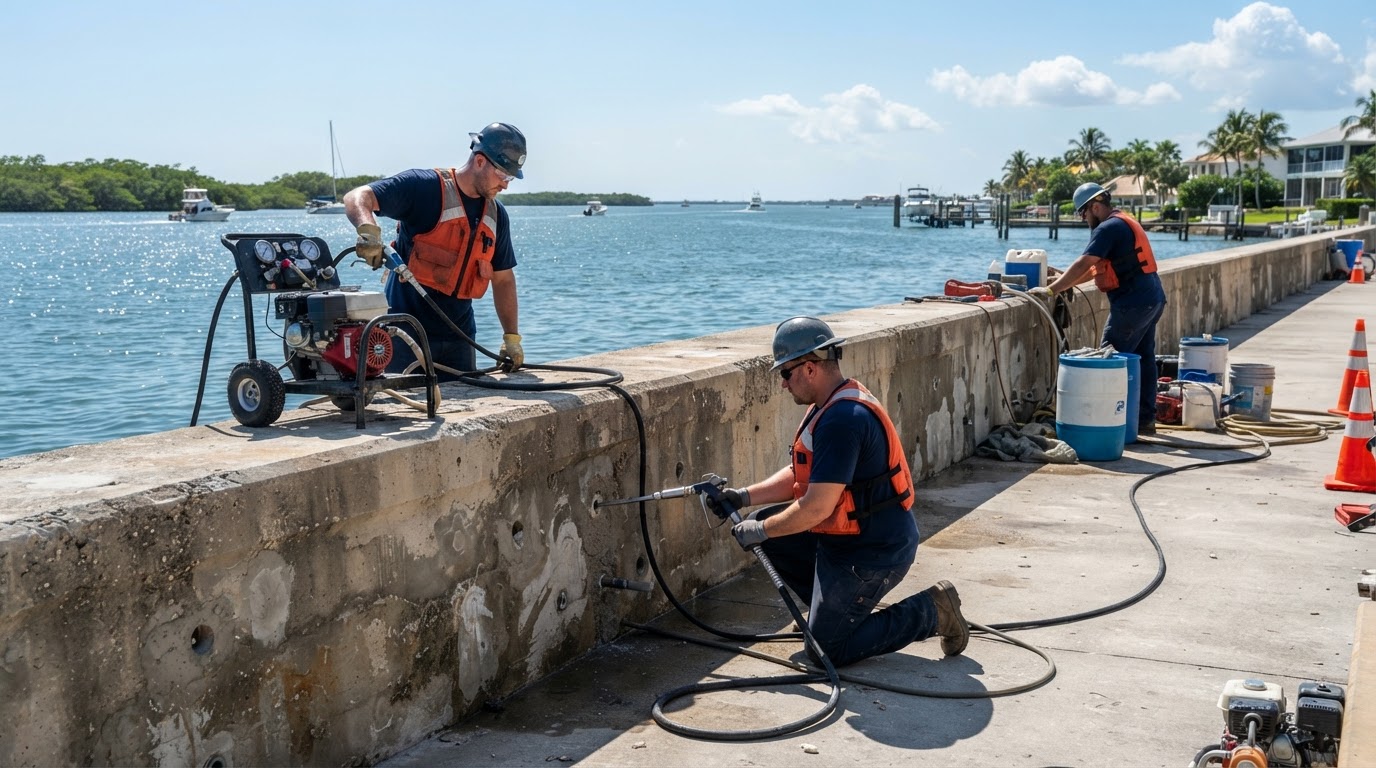
We inject polyurethane resin into the voids behind the wall. It expands, seals out water, and binds loose soil back into a stable mass—stopping washout at its source.
Jet Filters
Installed through the seawall, jet filters relieve built-up hydrostatic pressure by giving trapped water a controlled path out—reducing the force that pushes the wall forward.
French Drains
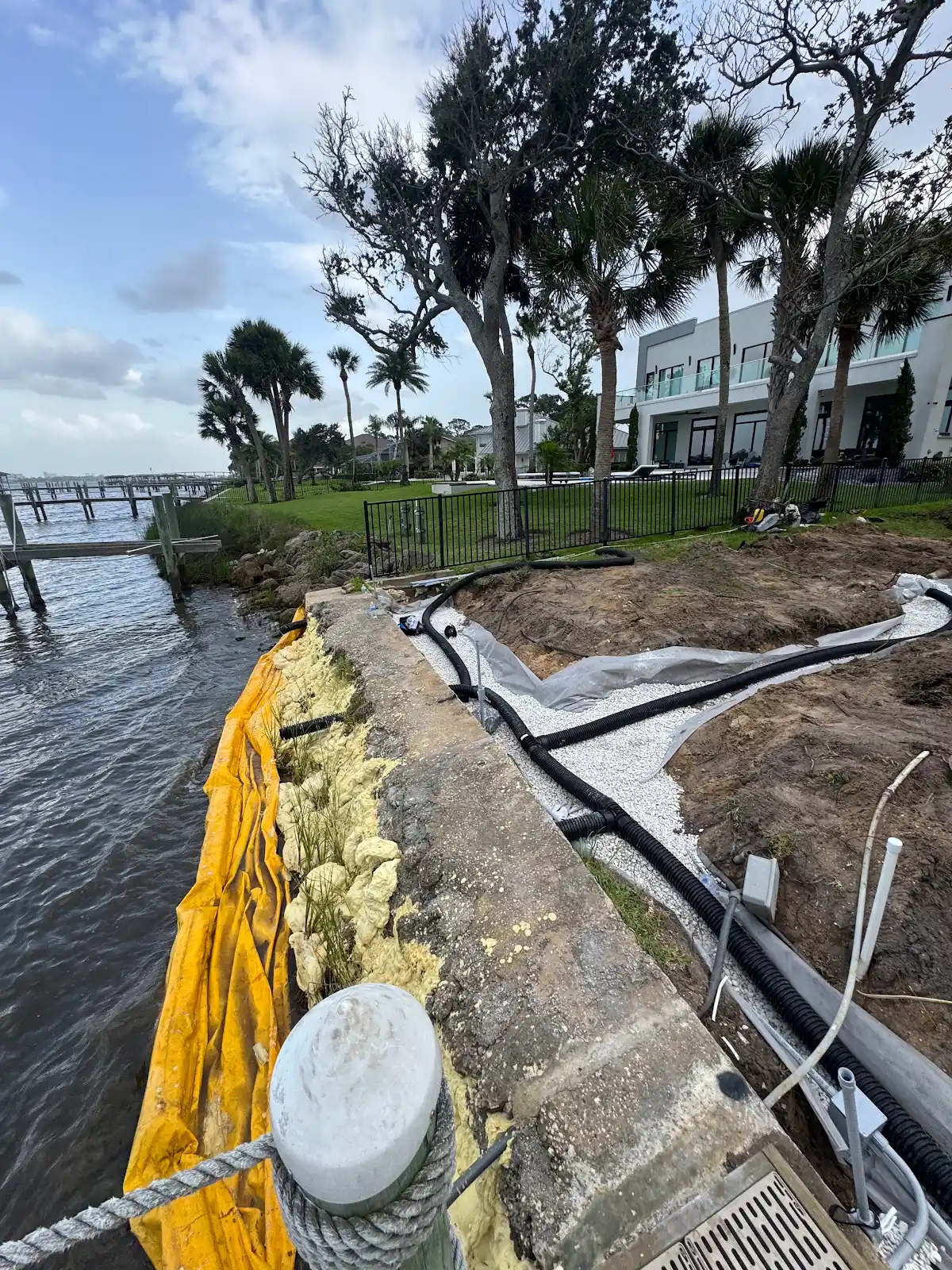
Where surface and groundwater need to be managed behind the wall, we install French drains to redirect flow away from the seawall and relieve pressure at the source.
Repair options depend on site conditions. An on-site assessment determines which methods fit your seawall.
Barrier-Island & Waterfront Access
We handle difficult waterfront access that other contractors avoid—including barrier-island projects that require a barge. If your seawall sits on a canal lot, a narrow island, or anywhere tough to reach, we've done it before.
- Barge access to barrier islands
- Tight canal-front lots
- Residential, commercial & municipal seawalls
Notice Cracks or Washout? Don't Wait.
Seawall problems get more expensive the longer water keeps moving soil. A free on-site assessment tells you exactly where things stand.